Monday, July 16, 2007

JVC KD-PDR30 CD Receiver

  • The good: The JVC KD-PDR30
    comes ready to play iPods out of the box. Its bright display, simple
    faceplate design, and innovative D-pad make the system easy to use on
    the move, and we like its auxiliary input jack for non-iPodrians.
  • The bad: As
    with many other "made-for-iPod" car stereos, the KD-PDR30 fails to give
    users a means of quickly and easily navigating large iPod libraries.
  • The bottom line: The
    JVC KD-PDR30 looks and sounds good, and its standard iPod connectivity
    will endear it to those looking to take their iTunes on the road.
    However, its lack of a decent search mechanism for navigating large
    iPod lists means that it fails one of its primary usability functions.


    The JVC KD-PDR30 is a car stereo designed specifically for use with
    iPods. Its simple design and straightforward interface make it easy to
    plug in and play--but navigating through iPod libraries is not as
    straightforward.


    Design


    The JVC KD-PDR30 features a stylish, silver-plastic-trimmed faceplate
    with two circular controls on the left-hand side: one is a standard
    volume dial, and the other is a four-way D-pad similar to one we saw
    recently on the JVC KD-HDR1.
    Being specifically designed as an iPod interface (note the PD in the
    product name), the JVC KD-PDR30 comes with an iPod connector as
    standard. When installing the stereo in a car, users can run the cable
    for the connector through the glove box (as we did in our test) or
    place it elsewhere in the cabin; however, as the iPod controls
    themselves are rendered redundant when the player is connected to the
    stereo, the iPod does not need to be accessible while driving. The
    scenario is different for those connecting other (non-iPod) MP3 players
    to the JVC KD-PDR30 via its front-mounted auxiliary input jack, as
    music selection on those players must be performed using the player
    itself.


    The JVC KD-PDR30's display consists of an eight-character monochrome
    white-on-black LCD panel, with various backlit icons indicating
    playback source, playback mode, and EQ controls. Six radio-preset hard
    buttons along the bottom of the screen double as a means of altering
    the playback mode for CDs and iPod playback and are flanked by the
    Source Select and Mode buttons. We like the simple layout of the
    faceplate, and found it easy to program while on the road. In
    particular, the LCD text display is impressively visible in direct
    sunlight.


    Features

    In addition to its primary iPod playback capability, the KD-PDR30 can
    handle regular CDs and CD/RWs encoded in the MP3 or WMA formats. For
    the latter, the stereo will show ID3/WMA tag information, with users
    able to switch between artist/ album tags, track name, and an elapsed
    time readout by pressing the DISP button on the top-right side of the
    four-way D-pad. As with many single-DIN systems, the limited screen
    size of the KD-PDR30 means that tags are nearly always truncated,
    although an option is available to scroll them along.


    The KD-PDR30 features five preconfigured EQ settings (Rock, Pop, Jazz,
    Vocal, Hip-Hop) as well as user-adjustable settings for bass, midrange,
    and treble. There is also a Super Bass setting, which sets the stereo
    to maintain a full bass signal irrespective of audio volume. In Rock
    and Hip-Hop modes, Super Bass is activated automatically, leading to a
    very aggressive (and often overwhelming) bass tone.


    Performance

    JVC's attempt to create a stereo specifically for the iPod age is not a
    bad effort, but it could use some improvements. (An FYI to early
    adopters: the JVC KD-PDR30 will not work with iPhones: having plugged
    an iPhone into the standard 30-pin iPod connector, we were met the
    message that "this product was not designed to work with iPhone".)

    When playing songs from a connected iPod, users are given many of
    the options they get from the iPod player itself, including: Shuffle
    (albums, songs, playlists, and so on) and Repeat. The D-pad controller
    is loosely based on the design of the iPod wheel itself, and, while it
    does take some time to get used to (there is no center button, for
    example), it generally succeeds in giving drivers a useful means of
    transferring control of the player to the stereo. Each of the four
    compass point buttons corresponds to a function on the iPod, with Up
    acting as the Menu button, and Down as the Play/ Pause and Select
    button.


    One difference between the D-pad and the iPod wheel is the Menu
    structure: whereas pressing the Menu button on an iPod takes you back
    only one level, the Up button on the JVC D-pad takes you right back to
    the category select level (playlist/ artist/ track/ genre). This can be
    slightly annoying if you want to hear a different album by the same
    artist without going all the way back to the root level to make the
    selection.


    Where the JVC KD-PDR30's iPod interface really falls down, however, is
    in its inability to enable drivers to quickly search large iPod
    libraries. The only way to get through a list of songs/ artists/ tracks
    is to press or hold down the forward and back Skip buttons; these
    actions allow the driver to skip one track or 10 tracks at a time,
    respectively. But this is still an inadequate means of getting through
    larger playlists that might be thousands of entries long. We would have
    liked a more sophisticated interface that enables drivers to search for
    tracks/ artist/albums by first letter, for example.


    In terms of output and sound quality, the JVC KD-PDR30's built-in
    MOS-FET amp delivers 20w-per-channel's worth of decent output, although
    MP3 discs sounded a little too soft for our liking, especially at
    freeway speeds with the car windows or sunroof open when the
    full-volume output was in danger of being overwhelmed. Other sources
    including Red Book CDs and iPods sounded loud enough, however. For
    those wanting more volume, the JVC KD-PDR30 comes with two pairs of
    2.5-volt preouts and a dedicated output for an external subwoofer which
    might be the means of getting the most out of the Super Bass and Rock
    and Hip-Hop EQ settings.


    In sum

    We wanted to like the JVC KD-PDR30: its plain, usable faceplate design
    and standard iPod compatibility are definite plus points in any modern
    car stereo. However, after pressing the forward Skip button a couple of
    dozen times to get to the bottom of our iPod library, we have to say
    we're disappointed in the search and navigation interface.


--------------------------------------------------------------------------
Distributed by Hasan Shrek, independence blogger. Also run online business ,internet marketing solution , online store script .
Beside he is writing some others blogs for notebook computer , computer training , computer software and personal computer

--------------------------------------------------------------------------

LaCie Biggest FW800 (1 terabyte)

  • The good: Four connection
    options: USB 2.0, FW400, FW800, and serial/RS-232; front-mounted LCD
    advises you of the status of the drive; supports several RAID arrays;
    supports a variety of file systems; drives are hot-swappable.
  • The bad: To
    hot-swap drives, you'll need to purchase LaCie's preinstalled drive
    trays; no backup utility; has fewer features and is more expensive than
    comparably sized NAS drives with RAID arrays.
  • The bottom line: If
    you need the fast throughput of a locally connected RAID array, the
    LaCie Biggest FW800 is a good choice, but if you don't mind the slower
    transfer speeds of Ethernet, a NAS RAID array can be less expensive and
    offer more features.


    The LaCie Biggest FW800 is a four-bay external SATA RAID drive that
    supports several levels of RAID, hot-swapping, and a variety of
    connection options. It comes in two capacities: 1 terabyte ($1,050) and
    2 terabytes ($1,530). Connection options include USB 2.0, FireWire 800,
    and FireWire 400 (using a FW400-to-FW800 cable). The included
    documentation walks you through the simple setup procedure, which does
    not require you to install drivers. A two-line text LCD sits on the
    front of the drive and relays information such as the drive's status
    and RAID level. Two LEDs on each drive bay blink or glow different
    colors, depending on the drive's status. The Biggest FW800 supports
    HFS+, FAT32, UNIX, and NTFS file systems, which makes it appropriate
    for various combinations of operating systems. The only major feature
    the FW800 lacks is a backup utility, which is odd, considering LaCie
    does have a proprietary utility in the form of the LaCie 1-Click Backup
    for Windows PCs and SilverKeeper for Macs.

    Most multidisk hard drives of this size and price are
    network-attached storage drives, making the non-networked Biggest FW800
    an expensive option by comparison. For example, the Buffalo Terastation Home Server
    offers 1 terabyte storage, a media server and print server, and
    external USB ports, plus a gigabit Ethernet connection--for $900. Our
    inclination is to spend the money on a NAS drive that offers more
    features, but LaCie is targeting the professional audio/video producer
    market that needs local backup and fast throughput for quickly moving
    large AV files. (Fast Ethernet has a maximum throughput of 100Mbps,
    while USB 2.0's theoretical max throughput is 480Mbps and FireWire
    400's max is 400Mbps.)


    Almost all the RAID-capable drives we've tested and reviewed are NAS
    drives, so we can't make direct comparisons with the LaCie FW800. We
    tested the drive in its default RAID 5 mode (quick explanation here
    Using the USB 2.0 connection, the drive wrote our 10GB test folder in
    25 minutes, 11 seconds, or 6.78Mbps. It read back the same folder in 9
    minutes, 48 seconds, or 17.42Mbps. The FireWire 400 results were very
    similar: 25 minutes, 27 seconds to write (6.71Mbps) and 9 minutes, 8
    seconds (18.71Mbps) to read. These numbers are slower than those for
    non-RAID hard drives, but that's to be expected. RAID 5 implementations
    are also slower than RAID 0 or RAID 1 arrays.

    Although the FW800 is advertised as hot-swappable, LaCie
    recommends not replacing the hard disk drive yourself in case of
    failure (that is, separating the hard drive from the drawer that slides
    into the drive bay); doing so will void the warranty. LaCie does sell
    replacement preinstalled hard disks, i.e., the hard drive plus the
    drive drawer, that you can hot swap on your own. The 250GB version
    costs $200, and the 500GB version costs $350. The other alternative is
    to contact LaCie customer support. This setup isn't nearly as
    convenient as that of the Drobo,
    which allows you to install naked hard disks directly into the
    enclosure. Drobo also offers data protection using some of the same
    techniques RAID uses, but includes some proprietary schemes as well. We
    found Drobo simple to use, but it has limited connection options. So
    far, only a USB 2.0 connection is available, though Data Robotics is
    working on an Ethernet version. Also, Drobo is on the expensive side:
    $500 without drives.


--------------------------------------------------------------------------
Distributed by Hasan Shrek, independence blogger. Also run online business ,internet marketing solution , online store script .
Beside he is writing some others blogs for notebook computer , computer training , computer software and personal computer

--------------------------------------------------------------------------

HTC Vox S710 (unlocked)

  • The good: The HTC Vox S710
    boasts a best-of-breed design that packs a full QWERTY keyboard into a
    compact slider design. The Windows Mobile 6 smart phone also offers
    excellent call quality, solid talk time battery life, Bluetooth and
    Wi-Fi, and a 2-megapixel camera.
  • The bad: The
    S710 doesn't support 3G, and the camera delivers off-colored photos.
    The device can be sluggish at times, especially with numerous
    applications open.
  • The bottom line: The
    HTC Vox S710 is an outstanding smart phone that brings a solid set of
    features and good performance into one sleek device; only the inclusion
    of 3G support could make this smart phone better.
  • he good: The HTC Vox S710 boasts a
    best-of-breed design that packs a full QWERTY keyboard into a compact
    slider design. The Windows Mobile 6 smart phone also offers excellent
    call quality, solid talk time battery life, Bluetooth and Wi-Fi, and a
    2-megapixel camera.
  • The bad: The S710
    doesn't support 3G, and the camera delivers off-colored photos. The
    device can be sluggish at times, especially with numerous applications
    open.
  • The bottom line: The
    HTC Vox S710 is an outstanding smart phone that brings a solid set of
    features and good performance into one sleek device; only the inclusion
    of 3G support could make this smart phone better.


  • Reviewed by:
  • Bonnie Cha
  • Review date: 7/13/07


When HTC unveiled the HTC S720 (the CDMA variant of the Vox) at CTIA 2007,
we couldn't help but be disappointed that it was being released in
Canada first. And here we are, four months later and still no signs of
a U.S. release--though the company has said it will come out later this
summer. Lucky for us, we got our hands on an unlocked version of the
HTC Vox S710, and the Windows Mobile 6
smart phone delivers on almost every front. It offers excellent call
quality, all the tools to keep a mobile professional productive on the
road, and a dynamite design that packs a full QWERTY keyboard into a
compact slider chassis. So what's its downfall? The lack of 3G.
The extra boost of speed could really have pushed the S710 ahead of its
competition. Even without it, however, the HTC Vox remains a very
powerful and able smart phone. There's no word yet on when the Vox will
be officially released in the States, or whether it will be a CDMA or
GSM version, but if you can't wait, you can purchase an unlocked
version (for use with T-Mobile or AT&T Wireless) now for about $450.


Design

The main attraction of the HTC Vox S710 is its design, and it's easy to
see why. The smart phone combines some of the best elements of the
company's other smart phones to make for one killer device. It has the
compactness and cell phone chassis of the Cingular 2125, while still managing to pack in a full QWERTY keyboard thanks to a slider design much like the Sprint Mogul.
The S710 measures 3.9 inches long by 1.9 inches wide by 0.6 inch thick
and 4.2 ounces with a candy-bar style and soft-touch finish, making it
more comfortable to hold and use as a phone than the bulky Cingular 8525 or wider T-Mobile Dash. The trade-off is that the S710 on the thicker side, so it will make for a tighter fit in a pants pocket.


On front of the device, there is a 2.4-inch diagonal screen that
displays 65,536 colors at a 320x240 pixel resolution, but be aware it's
not a touch screen. That said, text looked sharp, and images and videos
popped with vibrancy. We didn't have much problem reading the screen in
various lighting conditions, though it gets a bit washed out in direct
sunlight, and we also noticed that it can get pretty dirty with smudges
and fingerprints. To personalize your phone, you can change the layout,
color scheme, and background image of the Home screen, as well as
adjust the backlight.

Below the display, you'll find another benefit of the Vox's
design--a dedicated alphanumeric dialpad along with the standard
navigation controls. The keypad allows you to dial numbers without
having to search for the number buttons in a sea of other keys
(รก la Dash or BlackBerry Curve).
You also get two soft keys, a shortcut to the Home screen, a back
button, the Talk and End keys, and a four-way navigation toggle with a
center select key. Given that these controls are squeezed onto the
lower third of the face, they are a bit on the smaller side, so users
with larger fingers may encounter some difficulties when first trying
out the smart phone.


To expose the full QWERTY keyboard, just slide the front cover to the
left, which also triggers the screen to automatically switch from
portrait mode to landscape mode. As we've come to notice with similar
slider smart phones, the S710 experienced a delay when changing screen
orientation. Otherwise, the sliding movement is smooth and solidly
locks into place. We wish there was the same kind of locking mechanism
in its closed state, as it's easy to nudge the front flap when holding
the phone


The HTC Vox S710's keyboard features smallish, square buttons, but
the extra spacing between them makes it quite manageable for cranking
out e-mails, text messages, and notes without much problem. It may
require a short period of acclimation, but it's certainly roomier than
any of the latest BlackBerrys and the Dash, so if you can use those
keyboards, you'll be fine with the Vox. Like the T-Mobile Wing,
there are two small LEDs at the top of the keyboard that illuminate
blue to confirm the Caps or Alt functions, as well as two additional
soft keys.

On the left spine, you will find the volume rocker and voice
command/recorder launcher, while on the right side, there is the camera
activation key and microSD expansion slot. The camera is located on the
back of the device, along with a self-portrait mirror. The power button
is on top of the unit, and a mini USB port is on the bottom. Finally,
in a unique twist, the SIM card slot is located on the back of the
front cover, which you can access when the phone is in its open state.


HTC packages the S710 with an AC adapter, a USB cable, a wired
headset, a software CD, and reference material. For more add-ons,
please check our cell phones accessories, ring tones, and help page.


Features

Underneath all the fancy hardware, the HTC Vox S710 isn't much
different than other Windows Mobile smart phones. The Vox runs the
latest Windows Mobile 6 Standard Edition. We won't touch on all the
details of the operating system (You can learn more about the OS in our
full review of WM6),
but some notable additions include Windows Live integration, and you
now get the full Microsoft Office Mobile Suite instead of third-party
software for viewing and editing Word, Excel, and PowerPoint (view
only) documents in native format. The Vox also features Direct Push
Technology out of the box for real-time e-mail delivery and automatic
synchronization with your Outlook calendar, tasks, and contacts via
Exchange Server. The S710 also supports POP3 and IMAP accounts, but now
you can also view e-mails in their original HTML format, regardless of
account type. Other PIM tools and utilities include Adobe Reader, a
task manager, a voice recorder, a calculator, notes, and more.

As for voice features, the S710 is a quad-band world phone and
offers a speakerphone, smart dialing, voice commands and dialing, and
text and multimedia messaging. The address book is only limited by the
available memory (128MB RAM/64MB SDRAM; 50MB user accessible) while the
SIM card holds an additional 250 contacts. You can store up to 12
numbers for a single entry as well as home and work addresses, e-mail,
IM screen name, birthday, spouse's name, and more. For caller ID
purposes, you can pair a contact with a photo, a caller group, or one
of 25 polyphonic ringtones.

Wireless connectivity is the one area where the HTC S710
disappoints. Sure you get Wi-Fi (802.11b/g) and Bluetooth 2.0, but the
addition of 3G support could have really pushed the Vox ahead of the
competition. But alas, you're left to surf the Web via EDGE speeds or
by hopping onto a hot spot. On the bright side, the S710 was able to
find and connect to our test access point immediately, so we were
surfing the Web in a matter of minutes. As for Bluetooth, the smart
phone supports wireless headsets, hands-free kits, object exchange,
file sharing, and A2DP for stereo Bluetooth headsets.


The HTC S710 is equipped with a 2-megapixel camera with zoom and video
recording capabilities. The options are pretty standard for a camera
phone. You have your choice of five resolutions and four quality
settings. There's no flash, but you do get white balance settings,
including one for night shots, and various effects you can add the
picture. There's also a self timer, time stamp option, picture counter,
and flicker adjustment, among other things. For video, the Vox can
capture clips with or without sound in MPEG4, Motion JPEG, or H.263
format. There are only two resolution choices, but you get the same
white balance and color effect settings. Picture quality
was disappointing, mainly because we couldn't quite get a shot with
good lighting and coloring. We adjusted the white balance a number of
times, but as you can see from our standard test image, there's an
orangeish overtone--a shame, since there's sharp definition.


Finally, the HTC Vox S710 is outfitted with Windows Media Player
Mobile, supporting a number of popular audio and video formats--AAC,
MP3, WAV, WMA, MPEG-4, and WMV, to name a few. If you have TV shows
recorded on your Windows Media Center PC, you can transfer them to your
device for on-the-go viewing. The S710 also includes an Audio Manager
application as an alternative music browser and player.


Performance

We tested
the quad-band (GSM 850/900/1800/1900; EDGE) HTC Vox S710 in San
Francisco using AT&T Wireless service, and call quality was
excellent. We enjoyed clear sound with plenty of volume when talking
with friends, and our callers also reported good audio. We had no
problems interacting with our bank's automated voice response system,
either. For the most part, speakerphone quality was also quite good. We
heard a slight background hiss, but we could still hold a conversation,
and our callers said they didn't even realize we had turned on the
speakerphone as they noticed no drop in call quality. We had no
problems pairing the S710 with the Logitech Mobile Traveller Bluetooth headset.


Powered by a 201MHz Texas Instrument OMAP processor and about 24MB of
program memory, we worried that the S710 would suffer from sluggish
performance, but for the most part, this is not the case. There were
times when the system got bogged down when we had numerous applications
on, causing a slight delay in response time but nothing that truly
slowed down our productivity. We were able to transfer and view various
Office documents and PDFs, as well as music and video. Music playback
through the phone's speakers was OK. Songs sounded tinny through the
single speaker, and upping the volume only blew out the sound. As
usual, plugging in the included wired headset, as uncomfortable as it
is, improves the experience. Video playback was surprisingly decent, as
pictures looked great on the S710's sharp screen, and audio and video
always synced up. That said, the smaller display isn't optimal for
longtime viewing.


The HTC S710 is rated for 7 hours of talk time and up to 7 days of standby time. In our battery tests, the Vox well surpassed the rated talk time with a total of 11 hours on a single charge. According to FCC radiation tests, the S710 has a digital SAR rating of 0.8 watts per kilogram.


--------------------------------------------------------------------------
Distributed by Hasan Shrek, independence blogger. Also run online business ,internet marketing solution , online store script .
Beside he is writing some others blogs for notebook computer , computer training , computer software and personal computer
--------------------------------------------------------------------------

eMachines T5062

  • The good: A dual-core eMachines PC costs only $50 more; eight-channel audio.
  • The bad: Single-core processor lags behind budget competitors that offer dual-core processing; only two DIMM slots.
  • The bottom line: There's no reason to buy the eMachines T5062 when you can nab a dual-core PC from eMachines for just a few dollars more.


    We'll make this quick. If you're considering the eMachines T5062, don't. Do yourself a favor and spend an additional $50 on the eMachines T5230. That extra bit of money buys you a lot more budget PC.


    The two systems are identical in outward appearance, and inside they
    nearly match component by component. We recommend outlaying the extra
    money for the T5230 because it features a dual-core processor. The
    T5062 uses a single-core Athlon 64 3800+, and the performance
    difference between the two systems is great, particularly with
    multithreaded applications like Photoshop and iTunes. There's no need
    to settle for single-core processing in a budget PC when a dual-core
    chip is within reach.


    Regardless which of the two eMachines systems you choose, you'll get
    the same inoffensive and functional case. Both systems provide a DVD
    burner and a multiformat media card reader, and inside you get a x16
    PCI Express card slot should you want to add a graphics card on down
    the road. There's also room to add a second optical drive and another
    hard drive, but we would have liked to have seen more memory slots. The
    systems supply two DIMM slots, both of which are occupied by 512MB
    sticks. In order to expand the memory--and Vista gobbles memory
    resources--you'll need to replace what's there instead of simply adding
    to it.


    In addition to the CPU, these two budget PCs differ in two other areas:
    hard drive and audio. The T5062 comes with a 160GB hard drive--smaller
    than the T5230's 250GB drive. Oddly, the lower-end T5062 features
    eight-channel sound to the T5230's six-channel audio.


    Our Photoshop CS2 makes clear the advantages of dual-core processing.
    The single-core T5062 took more than twice as long to finish the test
    as the dual-core T5230. Perhaps you don't intend to run a high-end
    photo-editing app, but threaded applications like Photoshop that can
    take advantage of multiple processing cores are only going to become
    more common. Vista, itself, is multithreaded. iTunes is another
    multithreaded application, and as a result, the single-core T5062 took
    16 percent longer than its dual-core doppelganger to complete the test.
    On Cinebench, a 3D rendering test, the two eMachines PCs finished in a
    statistical tie when testing on a single-core. The single-core T5062
    obviously couldn't complete the multi-CPU portion of the test, but you
    can see how the performance of the other systems increases when running
    the same test over multiple processing cores.

    eMachines' single year of parts-and-labor coverage is on a par
    with the industry average. And while it's not 24-7, we can certainly
    live with phone support that's open from 5 a.m. to midnight (PT), all
    week long, even if it's not toll-free. Better yet, via eMachines' live
    chat support, you can let a technician take control of your system to
    help diagnose and solve problems. eMachines desktops also feature
    Gateway's BigFix diagnostic tool, which notifies you of potential
    software conflicts and available updates.


    --------------------------------------------------------------------------

Distributed by Hasan Shrek, independence blogger. Also run online business ,internet marketing solution , online store script .
Beside he is writing some others blogs for notebook computer , computer training , computer software and personal computer
--------------------------------------------------------------------------

Choosing a computer monitor

Amazingly sharp graphics, vibrant colors, comfort and sleek designs.
Those are just a few of the features you can get in a new PC monitor.
The options may be overwhelming, but if you know what you'd like to do
with your PC, these guidelines can help you choose the right display.


Step 1: choose flat-screen CRT or flat-panel LCD display


Your
first question is, CRT or LCD? The answer can depend on your reason for
buying a new monitor—do you just need a replacement, or do you
want to upgrade your current monitor?


If
you're looking for a basic model or inexpensive replacement, a CRT
(cathode-ray tube) will be the best deal. Although they're still bulky,
flat-screen CRT monitors are less susceptible to creating distracting
glare than traditional curved CRT models.


If
you're short on space or concerned about style, then a flat-panel LCD
(liquid crystal display) is where it's at. The screen is very thin,
meaning you can get a larger screen in a small space. Nothing
complements your desktop more than a sleek, fashionable slim design,
and for image quality, a flat-panel can't be beat. It offers a sharp,
crisp picture and superior contrast—with the whitest whites and
the blackest blacks.


Graphics


If
you're a gamer or designer, or if you use graphic-intense programs,
look at a high-end model with improved brightness and higher contrast
ratios. If you spend a lot of time on your computer, keep in mind that
a quality display will be better for eyestrain and fatigue. Also check
out the different input options to make sure your new monitor is
compatible with your video card.


Sound


Many
monitors don't come with killer built-in sound systems, so if you're
just looking for basic sound, check out a screen with built-in
speakers. If you're looking for more, look for a set of high-powered
external speakers to complement your new display.


After
you've chosen the perfect display to complement your home or office,
consider some of the following accessories to make your visual
experience even better:


PC speakers add awesome audio to games, movies, presentations and websites.


Video cards
maximize your monitor’s graphics potential, boost gaming
performance and can let you spread your work across multiple monitors.


KVM switches let you attach multiple PCs to one monitor.


--------------------------------------------------------------------------
Distributed by Hasan Shrek, independence blogger. Also run online business ,internet marketing solution , online store script .
Beside he is writing some others blogs for notebook computer , computer training , computer software and personal computer

--------------------------------------------------------------------------

A Messy Transition: Practical Problems With 32bit Addressing In Windows

From our Windows Vista performance guide:

Except in a few cases where 64-bit code is
clearly faster, the primary purpose for Vista x64's existence is to
resolve the problems of 32-bit addressing space, and we're just not at
the point yet where even most enthusiasts are pushing that limit. Once applications begin to push the 2GB addressing space limitation of Win32 (something we expect to hit very soon with games) or total systems need more than 4GB of RAM, then Vista x64 in its current incarnation would be a good choice.


For some time now we have been mentioning the potential problems
that are likely to result from the switchover from 32bit(x86) Windows
to 64bit(x64) Windows. Due to a multitude of issues, including Windows'
memory management, the basic design of the PC architecture, and
consumer support issues, there is no easy path for mass migration from
32bit Windows to 64bit Windows. As a result we have been expecting
problems as consumers begin to make the messy transition.


We published the above mentioned guide on February 1st, expecting
the fall/winter 2007 games to be the ones to push the 2GB addressing
space limitation of Windows, and it turns out we were wrong. It turns
out that two weeks after we published the above article, THQ published
Supreme Commander, a RTS with a massive appetite for resources. It can
be simultaneously GPU limited and CPU limited, which is why it's a
standard benchmark here for our performance articles, it's also memory
limited in more than one way: it's hitting the 2GB barrier of 32bit
Windows.


An artifact of the design of 32bit processors and the 32bit API for
Windows, the 2GB barrier is a cap on how much addressing space (related
to but not equivalent to memory usage) a single application can use.
This isn't a bug but rather the result of how hardware and software was
created so many years ago, and while everyone has known this barrier
will inevitably be hit, as we'll see there are several reasons why it
can't simply be moved or bypassed. Meanwhile hitting it involves
affected applications crashing for what can appear to be no good
reason, and understanding why the 2GB barrier exists and what can be
done will be important for resolving those crashes.


On a personal note, I am a semi-casual player of real time
strategy(RTS) games and I've been playing Supreme Commander lately.
This is a different kind of article, it's a record and the result of my
own efforts to resolve why I was having crashing issues with Supreme
Commander. With no intended disrespect towards THQ or the game's
developers (Gas Powered Games) we could have not possibly asked for a
better example of the 2GB barrier in action. It's exactly the
experience we believe many people will have as they hit the 2GB
barrier, mainly those power users who use large monolithic applications
such as games or multimedia tools. This is an article on what the
problem with the 2GB barrier is, what kind of experiences a user may
expect when hitting it, and what can be done to fix it.


But before we get too far ahead of ourselves, let's discuss memory
management in Windows. Understanding the problem with Supreme Commander
requires understanding what the 2GB barrier is, why it's there, and
what makes it so problematic.


--------------------------------------------------------------------------
Distributed by Hasan Shrek, independence blogger. Also run online business ,internet marketing solution , online store script .
Beside he is writing some others blogs for notebook computer , computer training , computer software and personal computer

--------------------------------------------------------------------------

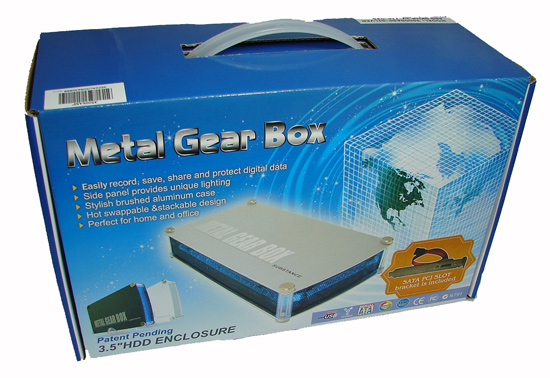
Galaxy Metal Gear Box 3500SASP - SATA/USB 2.0 Enclosure on a Budget

GMG Inc.
has been providing a variety of drive enclosures since 2000. Galaxy
Metal Gear Box provides several external drive enclosure designs with
an emphasis on USB 2.0, Firewire (IEEE 1394), and SATA interface
technologies. They are utilizing their enclosure expertise to expand
their product portfolio and are now offering Digital Media gateway products.


We will be taking a look at the 5202 Galaxy series in the near future
that offers internal drive support for either a standard 5.25" Optical
drive or a 3.5" hard drive based on the SATA standard. A variety of
interface options are available including Galaxy's first eSATA
implementation.


Our review today centers on the Galaxy Metal Gear Box series of
enclosures with our unit featuring a SATA/USB 2.0 interface. Unlike our
recent review of the ICY DOCK MB559US-1SMB that featured an eSATA
interface, our Galaxy unit uses the standard SATA interface. While
performance is very similar between the two units the question of
portability comes into play from a performance aspect.


The Galaxy unit ships with a SATA bracket that connects to an
internal SATA port on the motherboard. This is basically a fixed design
concept unless you have the ability to run a SATA cable directly to the
motherboard port from the enclosure. Of course you can still utilize
the USB 2.0 port if you are on the go, but the Galaxy enclosure defeats
the performance and portability advantages of eSATA equipped systems.


However, the unit is priced around $30 and is really designed for the
user that needs to quickly add an external drive to a system. This
allows the user to take advantage of the SATA interface for its
inherent performance advantages but it can also serve in a pinch as a
portable drive via the USB 2.0 interface. Let's now find out how
Galaxy's most popular SATA drive enclosure performs today.


--------------------------------------------------------------------------
Distributed by Hasan Shrek, independence blogger. Also run online business ,internet marketing solution , online store script .
Beside he is writing some others blogs for notebook computer , computer training , computer software and personal computer

--------------------------------------------------------------------------

The Single 12V Rail SilverStone Olympia OP650

Introduction

Not too long ago, a rogue division of Cooler Master left to form their
own company called Silverstonetek. While they are arguably more famous
for their HTPC cases today, Silverstone has already developed a vast
number of power supplies and is getting stronger with each new series.

The Olympia series is designed by Silverstone's newly acquired
crew that came over from Etasis to form a sister company called
Impervio. With this move, Silverstone makes it clear that they are
interested in branching out into other areas of the power supply
market. At the CeBIT earlier this year, they were already showing a
server power supply, and more will follow in the near future.

There are two things which help this power supply stand out from most
other units. Silverstone is one of the first manufacturers that is
actually returning to Taiwan for production. What's noteworthy about
this is the fact that Silverstone has set up a robot factory in Taiwan
that is building the PSU totally by itself. The positive effect of this
is the same as what we see with things like car manufacturing where the
work is done by robots: the overall soldering and precision is just
better than it is by hand. This fact can be seen quite clear later when
we take a look inside of this unit.

The second special characteristic is the single 12V rail. In a
time when other manufacturers are building up to six 12V rails in their
PSUs, Silverstone has come up with a single rail able to pull a load up
to 54 amps. If we look to the actual Intel ATX12V specs, it states that
there should be no rail with more than 20 amps for safety reasons.
That's a fine step but not possible when you listen to the graphics
card manufacturers. They ask for up to 30 amps from a single 12V rail
which would make every OCP kick in if reached since they lie at around
24 amps. The result would be a shut-down of the PC while running the
actual application. With a single 12V rail Silverstone went in another
direction. If you have enough power to supply every component in the PC
from a single rail, there would never be any problem since the PSU is
regulating all the power drawn from just one source.

This might be a valid way to design a power supply, but, even
though we don't know what it is, Intel probably had a reason for
designing the specifications around a 20 amp per 12V rail limit.
Silverstone backs up their design choice by stating that there is no
application which could force this kind of power supply to fail. We
have not heard of any problems in the field with a single high current
12V rail, and in our tests we weren't able to provoke this power supply
into failing. We will make sure to pay close attention to this during
the tests.


--------------------------------------------------------------------------
Distributed by Hasan Shrek, independence blogger. Also run online business ,internet marketing solution , online store script .
Beside he is writing some others blogs for notebook computer , computer training , computer software and personal computer

--------------------------------------------------------------------------

No 3G on the iPhone, but why? A Battery Life Analysis

Most of the initial reviews of Apple's iPhone
shared one complaint in common: AT&T's EDGE network was slow, and
it's the fastest cellular network the iPhone supported.  In an interview with The Wall Street Journal, Steve Jobs explained Apple's rationale for not including 3G support in the initial iPhone:


"When we looked at 3G, the chipsets are not quite
mature, in the sense that they're not low-enough power for what we were
looking for. They were not integrated enough, so they took up too much
physical space. We cared a lot about battery life and we cared a lot
about physical size. Down the road, I'm sure some of those tradeoffs
will become more favorable towards 3G but as of now we think we made a
pretty good doggone decision."


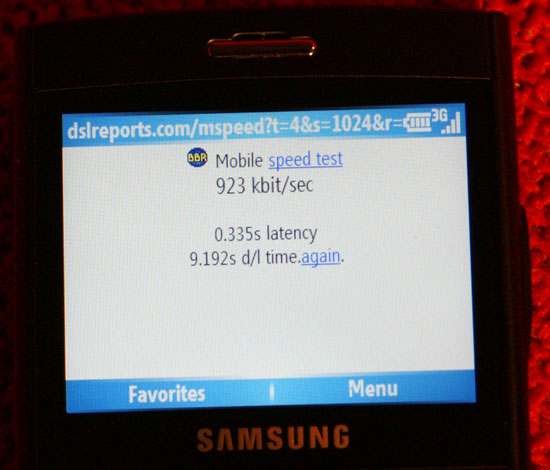
The primary benefit of 3G support is obvious: faster data
rates.  Using dslreports.com's mobile speed test, we were able to
pull an average of 100kbps off of AT&T's EDGE network as compared
to 1Mbps on its 3G UMTS/WCDMA network. 


Apple's stance is that the iPhone gives you a slower than 3G
solution with EDGE, that doesn't consume a lot of power, and a faster
than 3G solution with Wi-Fi when you're in range of a network. 
Our tests showed that on Wi-Fi, the iPhone was able to pull between 1
and 2Mbps, which is faster than what we got over UMTS but not
tremendously faster.  While we appreciate the iPhone's Wi-Fi
support, the lightning quick iPhone interface makes those times that
you're on EDGE feel even slower than on other phones.  Admittedly
it doesn't take too long to get used to, but we wanted to dig a little
deeper and see what really kept 3G out of the iPhone.


Pointing at size and power consumption, Steve gave us two targets to
investigate.  The space argument is an easy one to confirm, we
cracked open the Samsung Blackjack and looked at its 3G UMTS
implementation, powered by Qualcomm:

Mr. Jobs indicated that integration was a
limitation to bringing UMTS to the iPhone, so we attempted to identify
all of the chips Apple used for its GSM/EDGE implementation (shown in
purple) vs. what Samsung had to use for its Blackjack (shown in red):


Motherboard Battle: iPhone (left) vs. Blackjack (right), only one layer of the iPhone's motherboard is present


The largest chip on both motherboards contains the multimedia engine
which houses the modem itself, GSM/EDGE in the case of the iPhone's
motherboard (left) and GSM/EDGE/UMTS in the case of the Blackjack's
motherboard (right).  The two smaller chips on the iPhone appear
to be the GSM transmitter/receiver and the GSM signal amplifier. 
On the Blackjack, the chip in the lower left is a Qualcomm power
management chip that works in conjunction with the larger multimedia
engine we mentioned above.  The two medium sized ICs in the middle
appear to be the UMTS/EDGE transmitter/receivers, while the remaining
chips are power amplifiers. 


The iPhone would have to be a bit thicker, wider or longer to
accommodate the same 3G UMTS interface that Samsung used in its
Blackjack.  Instead, Apple went with Wi-Fi alongside GSM - the
square in green shows the Marvell 802.11b/g WLAN controller needed to
enable Wi-Fi. 


So the integration argument checks out, but what about the impact on
battery life?  In order to answer that question we looked at two
smartphones - the Samsung Blackjack and Apple's iPhone.  The
Blackjack would be our 3G vs. EDGE testbed, while we'd look at the
impact of Wi-Fi on power consumption using the iPhone.


--------------------------------------------------------------------------
Distributed by Hasan Shrek, independence blogger. Also run online business ,internet marketing solution , online store script .
Beside he is writing some others blogs for notebook computer , computer training , computer software and personal computer

--------------------------------------------------------------------------